Showing posts with label How Do You Homeschool Series. Show all posts

Wednesday, September 22, 2021

How Do You Keep Records and Calculate Grades?

This post contains affiliate links - using affiliate links from Homeschool Coffee Break helps fuel this blog. 

How Do You Keep Records and Calculate Grades? Part of the How Do You Homeschool series on Homeschool Coffee Break @ kympossibleblog.blogspot.com


No matter how long we've been homeschooling, we are curious about how other homeschoolers do things. And homeschoolers who are newer to the game obviously have lots of questions! I wrote a series some time ago that attempted to answer some of the questions homeschoolers ask each other. Questions about how we handle some of the little details and about our opinions on different aspects of homeschooling. Questions that we all might answer differently because what works great in one family might not work at all in another. 

It's time for a new round of How Do You Homeschool articles. Some will be updated versions of the original series and some will be new, because there were a lot of questions I never got to the first time, and there are always new questions I didn't encounter earlier.


How do you keep records and calculate grades?

The tool I used for keeping all my records is Homeschool Tracker Online. I used it for lesson plans and for keeping homeschool records organized. It tracks assignments and calculates grades. It can produce a printed resource list as well, which is often handy for records. Basically, I kept an online record of the assignments and the grades, printing it as necessary. Since I usually printed out the assignment lists from week to week, we could have used those to show everything we had done and when.

You can find out a little more in my post Organizing and Record Keeping.

Organizing and Record Keeping (Blogging Through the Alphabet) on Homeschool Coffee Break @ kympossibleblog.blogspot.com

Record-keeping can help you show how much time was spent on school, what was studied, and how completely a subject was mastered. When my kids were young, it was perfectly acceptable to just show the workbooks with the pages dated as we worked on them. I did my best to get my kids to establish the habit of dating the pages they worked on. In fact, when they were little, I purchased one of those date stamps with the movable numbers, and they thought it was the greatest thing to rubber stamp their pages! As they got older, I still insisted on the dating, but I also kept more of the records on  Homeschool Tracker.The essentials were the date, time spent, books or resources used, and the grade earned. Often I printed the resource list so I could show all the related books that were read.

Homeschool Tracker Online - A Homeschool Coffee Break Review on kympossibleblog.blogspot.com

I found figuring out grades to be fairly simple - mainly because Homeschool Tracker did the math for me! My grading habits changed from when my students were in grade school as well. For young students, I did figure an actual grade for tests or major assignments, but it was also quite acceptable to just give an overall grade for a subject based on my opinion of how well they'd understood and how hard they were working. Except for math. In math their grades have always been based on whether they were getting the correct answers! As my kids got older, their quarterly and semester grades were based far more on the real average of their scores on tests and assignments. How nice to have the Homeschool Tracker figure those averages for me!

In high school, sometimes it's appropriate to use weighted grades. So a midterm exam or a research paper might be worth more of a final grade than a weekly quiz or short essay. Again, Homeschool Tracker can do the math for you. I used weighted grades in classes like English or History, weighting any tests or major papers more heavily than just reading and comprehension type assignments.

During high school years, detailed and accurate records of schoolwork may be especially important for students headed to college or trade school. Their work will need to be reflected in their transcript; and the quality of the transcript depends on the quality of the records of their coursework and grades. When planning for a transcript, try to give course titles that are succinct but give a good indication of what was studied. For instance, Great Books is not nearly as descriptive a course title as Early American Literature. A good course description that clarifies the objectives is also helpful.

Find out more in my post From the High School Lesson Book: Record-Keeping Resources

Record-Keeping Resources (From the High School Lesson Book) on Homeschool Coffee Break @ kympossibleblog.blogspot.com - A round-up of record-keeping resources


For more info, see my related posts:

High School Assignment Tracking
From the High School Lesson Book: Course Descriptions

High School Assignment Tracking on Homeschool Coffee Break @ kympossibleblog.blogspot.com

From the High School Lesson Book - Course Descriptions on Homeschool Coffee Break @ kympossibleblog.blogspot.com - some tips on how and why to write high school course descriptions

How do you keep track of all the schoolwork and assign grades? Leave a comment and let me know what works for you - or leave a homeschool question you're curious about.

The original version of this post appeared on Homeschool Coffee Break on October 18, 2018.


 Don't miss a coffee break! Subscribe to HS Coffee Break by email 

 ©2006-2021 Homeschool Coffee Break. All rights reserved. All text, photographs, artwork, and other content may not be reproduced or transmitted in any form without the written consent of the author. http://kympossibleblog.blogspot.com/ 

 We are a participant in the Amazon Services LLC Associates Program, an affiliate advertising program designed to provide a means for us to earn fees by linking to Amazon.com and affiliated sites.


Thursday, August 12, 2021

How Do You Kick Off the New Homeschool Year?

This post contains affiliate links - using affiliate links from Homeschool Coffee Break helps fuel this blog. 


No matter how long we've been homeschooling, we are curious about how other homeschoolers do things. And homeschoolers who are newer to the game obviously have lots of questions! I wrote a series some time ago that attempted to answer some of the questions homeschoolers ask each other. Questions about how we handle some of the little details and about our opinions on different aspects of homeschooling. Questions that we all might answer differently because what works great in one family might not work at all in another. 

It's time for a new round of How Do You Homeschool articles. Some will be updated versions of the original series and some will be new, because there were a lot of questions I never got to the first time, and there are always new questions I didn't encounter earlier.

For those following the traditional school calendar in any form, the start of a new school year is coming up quickly! So to start the new series, let's talk about starting a new year:

How do you get your school year off to a good start?

Assuming you've already got your curriculum ready to go, and have fulfilled any legal requirement such as a letter of intent or joining an oversight group, how do you kick off the school year in a positive way, and how do you set your homeschool up for a successful year?

Mission Statement - If you haven't already thought about it, you may want to write a brief mission statement for your school year. Decide what's most important for you to accomplish and your guiding principles to do that. I did that by choosing a School Scripture each year. Just as churches and businesses write a mission statement that helps them focus their efforts, a homeschool can benefit from a similar statement. If you're not sure what yours would include, keep it in the back of your mind over the next few days and weeks and probably you'll get some ideas. If you'd like to see the School Scriptures we've chosen, here's where I most recently summarized ours: School Scripture 2020-2021

School Scripture on Homeschool Coffee Break @ kympossibleblog.blogspot.com

Plan the schedule - Every school or homeschool needs lesson plans, right? You should have some kind of planned structure to build your homeschool days upon. If you lean towards unschooling or child-directed learning, that structure will be very broad and flexible. If it's your first year homeschooling, you may not know what your daily schedule should look like and you may not know how detailed your lesson plan should be. Consider your child's age and personality, and how your family usually functions. Very young, active children benefit from having a routine of knowing what comes next and how long they'll be doing a certain task. In general, younger students do better with "we're going to do this many pages in the workbook, and then we'll take a break before doing the next subject" than sticking to a set number of minutes per subject. Middle school and high school age kids are more able to work within a time frame like spending an hour per subject. 

In our homeschool, I always tried to make the First Day - or even the First Week - of a homeschool year special in some way. 

Take First Day photos! Just because they don't have a bookbag and a school bus to catch doesn't mean that first day shouldn't be memorialized. 


My daughter played along with the First Day Photo tradition all the way through high school, and her two years at community college, and in just over a week, I'll have to get a First Day photo for university!


My sons got less cooperative as they got older, but I have some great photos from their early grades!


Okay, this one is a joke from a summer vacation that included a living history museum, but it summarized how these two felt about First Day pictures!


First Day Event - Do something different to make the "official" first day of homeschool a special event. We usually have a special treat for breakfast or lunch on the first day each year - donuts or waffles for breakfast, or maybe we go out for lunch. Just something out of the ordinary. Some homeschool families I know make a big event of going to an amusement park or something similar, and plan it for the first day that public schools in their area are back in session. That's especially fun if the first day back to homeschool falls on the same day!
New School Supplies - If you've been homeschooling for awhile, chances are you don't need much in the way of school supplies. Or maybe one of your goals was to avoid having to shop for all the school things when everyone else in town is in those "back to school" aisles of the store. All the same, there's something special about a brand new box of crayons, a couple of blank composition books, or some colorful new notebooks. For you as the teacher too! I still teach at a co-op, and I get some new pens or a new notebook or lesson planner in preparation for a new school year.

My favorite teacher notebook from a few years ago,
 and my brand new planner.

Ease Into It - This was a practical strategy that helped us most years. Instead of going hard-core on the first day, with everyone getting up early and jumping right into a full schedule with all subjects, we got going in stages. A gradual adjustment to getting up at a set (and earlier) time than during summer, and easing into coursework with just a few subjects and half days during the first week or two and then adding the rest later. This gave us a chance to see where we might need to tweak the schedule as well. In scheduling and even with curriculum choices, be prepared to make adjustments early on if you see that something isn't working. Flexibility is one of the greatest advantages to homeschooling!

Clarify Expectations - Every one of the twenty-plus years that I homeschooled, and with kids that grew up doing it, we still needed to have some sort of a "back to school" conference to talk through our goals and plans for the year. Some simple reminders leading up to the first day, like a reminder that "you know you're going to have to be up and moving earlier once school starts, right?" or, "remember, there won't be TV or movies until schoolwork is done". I tried to consult them about what they thought would work best, for instance, "is first thing in the morning still the best time for you to work on math?". During the first week, preferably on the first day, we usually talked through the daily and weekly routine; we reviewed the expectations as to how much time should be devoted to each subject; and we looked through the curriculum we're using again to get a refresher in how it's laid out and our plan of attack. 

Look Ahead - We very often took our family vacations in the fall, so even as we kicked the school year off in late August, we were able to look forward to something fun coming up. Having a vacation or a fun field trip planned helps motivate everyone. Plan some small appropriate rewards for you and your students as you complete certain education milestones. Have some as known goals to work for like dinner from their favorite restaurant when they reach the halfway point in their textbook. And be ready to surprise them with fun rewards when they ace a test at co-op or finish reading an assigned novel that was difficult. 

How do you kick off a new homeschool year successfully? Leave a comment and let me know what works for you - or leave a homeschool question you're curious about.

See more Back to Homeschool thoughts in these blog hop series:


5 Days of Back to Homeschool Coffee Breaks on Homeschool Coffee Break @ kympossibleblog.blogspot.com - This is the hub for the Back to School Blog Hop, August 14-18, 2017


Some of this article was adapted from my previous post: My Back to Homeschool Checklist: Get Off to A Great Start as part of the My Back-to-Homeschool Checklist seriesoriginally published in August 2014.


You may also find some good ideas at the Not-Back-to-School Blog Hop: Making Memories to Start the School Year hub at the Homeschool Review Crew blog.

Don't miss a coffee break! Subscribe to HS Coffee Break by email 

 ©2006-2021 Homeschool Coffee Break. All rights reserved. All text, photographs, artwork, and other content may not be reproduced or transmitted in any form without the written consent of the author. http://kympossibleblog.blogspot.com/ 

 We are a participant in the Amazon Services LLC Associates Program, an affiliate advertising program designed to provide a means for us to earn fees by linking to Amazon.com and affiliated sites.


Tuesday, July 7, 2020

Suddenly Homeschooling - How To Get Started

This post contains affiliate links - using affiliate links from Homeschool Coffee Break helps fuel this blog. 


Almost two years ago I started writing a series of "How Do You Homeschool?" articles with the idea that even veteran homeschoolers are curious about how other homeschoolers do things. And homeschoolers who are newer to the game obviously have lots of questions! The series attempted to answer some of the questions homeschoolers ask each other. Questions about how we handle some of the little details and about our opinions on different aspects of homeschooling. Questions that we all might answer differently because what works great in one family might not work at all in another. 

Enter 2020 and lengthy public school closures and uncertainty about when and how schools may open in the fall, and this series may prove helpful to families that are deciding to continue educating at home in some fashion rather than deal with changing or awkward scheduling, uncomfortable restrictions in the school setting, or a distance learning set-up that wasn't working out. So to follow up on the Suddenly Homeschooling - Pro Tips articles that I've shared, here is some of the nitty gritty stuff that you might need to look at if you're planning on joining the growing ranks of homeschoolers, even if it's just for this year. (This information is geared for my home state of Maryland, but most of it applies across the board in the US.)

For a summary of the homeschool laws by state, visit the Homeschool Legal Defense Association (HSLDA) website: HSLDA Homeschool Laws by State

This is a checklist of things to know as you get started with homeschooling!
  • You will need to send a "Letter of Intent" to your county school system. In most cases, this notification should be submitted about two weeks before the school year starts or two weeks before you plan to begin homeschooling. Search your county public school website for the details that apply in your district. See my district's website for an example of what to expect: CCPS Home Instruction page
  • In most states, you will need to submit to some kind of oversight - either a registered oversight group or the public school system. Many, if not most, of the oversight groups are faith based, and the membership fees and requirements vary, as do the additional services they provide. Some parents have very positive experiences using the public school system oversight, but others don't. In general, I've seen that families who are not religious at all, or that intend to homeschool for only a year or two choose the public school system and do well with that. Keep in mind that you can change your oversight! If the oversight program you'd like to join has a waiting list for new members, for example, you may use the public school oversight until a spot opens up. Whichever you choose, the duty of the oversight is simply to make sure you are in compliance with the law regarding homeschooling. 
  • If you've given your notice and you've chosen your oversight, you just need to provide "regular, thorough instruction during the school year in the studies usually taught in the public schools to children of the same age." (See COMAR Home Instruction Regulation 2016, 13A.10.01) You can choose the curriculum and publisher, and you may set the schedule that works for your family. You may do all the teaching yourself, or use a co-op or tutor, or choose an online school, or a combination. Even if your child's education is provided by someone else, you as the parent are making the decisions for what they are studying, and how it gets done!
  • You should plan on including English, mathematics, science, social studies, the arts, health, and physical education; however, you have a lot of flexibility in how to include these. For instance, many curriculum options combine two or more subjects such as language arts, social studies, and art or music. And music lessons or community sports can be considered part of your homeschooling.
  • Standardized testing is not required at any grade level in Maryland! 


Registered Oversight Group or Public School System Oversight? 

The public school system oversight is free, but generally it will not provide any curriculum or a diploma upon graduation. Don't count on getting much in the way of assistance or advice from your public school reviewer - some (probably most!) are very helpful and encouraging, but their job is really just to review your portfolio. 

Oversight groups do charge a fee for membership, and usually this is an annual fee per family. Many oversight groups provide diplomas as well as transcripts for graduating students. Groups vary in the additional services offered, but most are happy to help you figure out curriculum choices and because your reviewer is also a homeschooler, she is usually a great resource for advice and encouragement. 

Okay, what about . . .
  • school sports? In Maryland, homeschool students are not allowed to play on public school sports teams. Some private schools do allow homeschoolers, and there are some teams that are specifically for homeschool students.
  • high school credits? Check your district's website for the general requirements for high school graduation and plan courses accordingly. (For reference, here is my county's graduation requirements page) If you are in an oversight group, they will let you know what's needed for graduation, and the group may have additional or adjusted requirements. For example, my oversight group is faith-based, and we require two credits of Bible for graduation from our program. If your student is college-bound, it's best to check what coursework and credits the college will be looking for.
  • a high school transcript? Again, oversight groups often come through here because they can provide transcripts and send them to the colleges or wherever they are needed. You can also produce your own transcript, and parent-provided transcripts have been accepted by colleges and military without any problem. You can make your own or use one of several programs to produce one.
  • classes I don't know how to teach? First, don't borrow trouble! If your kids are elementary age, you probably just need to be able to read ahead in a teacher's guide and you'll be fine. Online curriculum is an option that many find useful. Homeschooling does allow you the opportunity to learn along with your kids too, so don't feel like you need to be the expert in everything! Probably your most valuable tool for the subjects you don't feel confident about is a co-op. There are a lot of co-ops and they come in many different varieties. Many oversight groups have their own co-op classes as an option. For high school classes there are co-ops and tutorial groups that give students a classroom experience and specialized instruction. 
See also:

The previous Suddenly Homeschooling - Pro Tips posts:


The rest of the How Do You Homeschool Series here on Homeschool Coffee Break, particularly:


How Do You Make a Four-Year Plan for High School? Part of the How Do You Homeschool Series on Homeschool Coffee Break @ kympossibleblog.blogspot.com


Do Your Students Take Outside Classes? Part of the How Do You Homeschool series on Homeschool Coffee Break @ kympossibleblog.blogspot.com


If you have specific questions, I would love to help! Leave a comment or message me using my Facebook page.

 Don't miss a coffee break! Subscribe to Homeschool Coffee Break by Email! 

 ©2006-2020 Homeschool Coffee Break. All rights reserved. All text, photographs, artwork, and other content may not be reproduced or transmitted in any form without the written consent of the author. http://kympossibleblog.blogspot.com/ 

 We are a participant in the Amazon Services LLC Associates Program, an affiliate advertising program designed to provide a means for us to earn fees by linking to Amazon.com and affiliated sites.


Monday, June 15, 2020

Suddenly Homeschooling - Pro Tips - Carrying On At Home

This post contains affiliate links - using affiliate links from Homeschool Coffee Break helps fuel this blog. 

So the 2019-2020 school year is over - or pretty much over - and finishing school at home has been the reality for most families. School districts are rolling out various plans for what public schools might look like in the fall, and many parents are questioning their options. And some school districts aren't even planning in-person instruction this fall! 

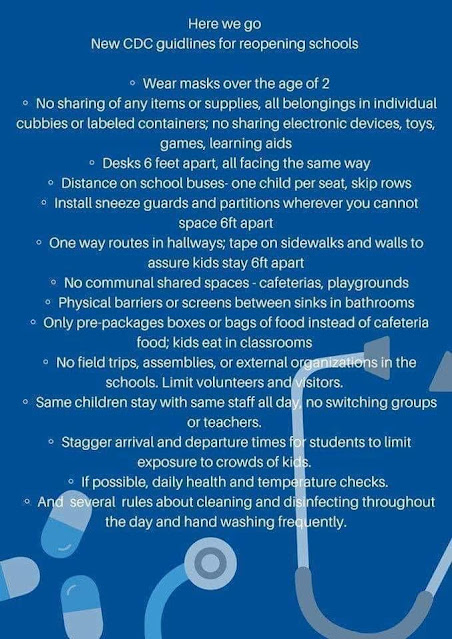
Have you seen the CDC's recommendations for going back to school? (Despite the typo in this graphic, these really are the guidelines!)


Speaking for myself, I would NOT be okay with this. A lot of parents I've been in contact with are not okay with it either. Some of it isn't practical, and some of it is just plain dystopian. Some parents are not wanting to send children to school because they're worried about the virus; and some parents are not wanting to send children to school if they'll be expected to wear masks and stay distanced. And many parents have also discovered some of the many benefits and joys of doing school at home. 

If you're considering homeschooling, feel free to contact me! I'd love to help you figure things out and put you in touch with groups or resources.

Homeschooling vs. Crisis Schooling

Homeschooling is different from what most families have been doing since the public schools closed earlier this year. If your student has been getting some distance learning and you're trying to fill in the gaps, or if you're trying to keep your child on track and interested in learning while waiting for things to go back to normal, you're probably doing "crisis homeschooling". True homeschooling is more relaxed and allows you to choose curriculum and tailor the learning to your child's needs and interests. Each state and province has its own guidelines that apply to home education, but even in the more regulated states, you will have more choices and freedom than you do in the public school. 

When parents pull their children out of school in order to start homeschooling, it's very often a good idea to "detox" or "deschool" for a little while. Take a break from the entire school routine and whatever it was that was not working for the family. Believe it or not, that's what the majority of families have been doing since the school year was abruptly interrupted by the lockdowns! If you're looking to homeschool more long term, you've already taken that first step, and you have likely started learning more about what works and what doesn't for your kids!

Homeschooling means you get to choose curriculum, methods, and schedules that work for your kids and for your family, whatever your situation. You'll get to decide how to structure your days, when to take school breaks, and what pace is best to get through the work. 

You may be wondering - legitimately - about how your kids will be able to spend time with friends, engage in extra-curricular activities, or what to do about subjects you're not confident in. During more normal times, homeschoolers generally have plenty of opportunities to get together with friends in all kinds of activities, both educational and just for fun. Field trips, group and community activities, and co-op classes all help fill these needs. Co-ops are a great example of how like-minded homeschooling parents get together to pool resources and expertise in order to provide opportunities for their kids. Especially for middle school and high school grades, co-ops and tutorial classes provide opportunity for kids to be together with peers and to receive instruction from someone other than mom or dad. 

Why continue homeschooling?

As mentioned, the freedom to make your own choices about when and how, and which resources are best. Homeschooling helps build strong family relationships and closeness. In the long term, homeschool students have proven to be well-prepared for college, for the work force, and for having positive impact in their communities. Average GPAs and college exam scores for homeschooled students are higher overall, and many colleges actively recruit homeschoolers. 

If your student has a particular interest or a career goal they are pursuing, homeschooling allows you to tailor their studies and their schedule to allow them to really focus. Music students can have time to devote to practicing their instrument. Athletes can devote time to training. Future doctors, scientists, entrepreneurs, and other goal-oriented students can tailor studies for their interest areas.

See also:

The How Do You Homeschool Series here on Homeschool Coffee Break, particularly:


How Much Time Do You Spend on Schoolwork? Part of the How Do You Homeschool series on Homeschool Coffee Break @ kympossibleblog.blogspot.com


How Do You Keep Records and Calculate Grades? Part of the How Do You Homeschool series on Homeschool Coffee Break @ kympossibleblog.blogspot.com


How Do You Focus on Your Student's Unique Interests? Part of the How Do You Homeschool series on Homeschool Coffee Break @ kympossibleblog.blogspot.com


And around the web:


If you have specific questions, I would love to help! Leave a comment or message me using my Facebook page.

 Don't miss a coffee break! Subscribe to Homeschool Coffee Break by Email! 

 ©2006-2020 Homeschool Coffee Break. All rights reserved. All text, photographs, artwork, and other content may not be reproduced or transmitted in any form without the written consent of the author. http://kympossibleblog.blogspot.com/ 

 We are a participant in the Amazon Services LLC Associates Program, an affiliate advertising program designed to provide a means for us to earn fees by linking to Amazon.com and affiliated sites.


Wednesday, August 14, 2019

How Do You Homeschool? Ask the Homeschool Review Crew!

This post contains affiliate links - using affiliate links from Homeschool Coffee Break helps fuel this blog and our homeschool - thank you!

No matter how long we've been homeschooling, we are curious about how other homeschoolers do things. And homeschoolers who are newer to the game obviously have lots of questions! This series will try to answers some of the questions homeschoolers ask each other. Questions about how we handle some of the little details and about our opinions on different aspects of homeschooling. Questions that we all might answer differently because what works great in one family might not work at all in another. 

How do you homeschool? Ask the Homeschool Review Crew!

I really meant to post this yesterday, since I've been trying to be consistently posting a How Do You Homeschool article every other Tuesday. But this being our vacation/staycation week, that didn't happen. I also meant to participate in the 2019 Not Back to School Homeschool Blog Hop hosted by the Homeschool Review Crew, but that didn't happen either, and for basically the same reason.

The Homeschool Review Crew is a group of homeschool bloggers with all kinds of backgrounds and homeschool styles. Crew members live in the United States, Canada, and many other countries around the world. There are families with only one student and families with many children; homeschool mommas with infants and with grandchildren. Whatever your homeschool questions may be, there is likely someone on the Crew that addresses them in their blogs. This is a great week to get to know the various Crew members as many of them participate in the Blog Hop.

Start by heading over to the Homeschool Review Crew blog, where you'll find blog hop articles from Crew leaders and the links you can follow to all the participating bloggers and their Not Back to School series posts this week:


Would you like to join the Homeschool Review Crew? The Crew is accepting mid-year applications and we'd love to have you. Find out more here: Apply to join the Homeschool Review Crew!


 Don't miss a coffee break! Subscribe to Homeschool Coffee Break by Email!

 ©2006-2019 Homeschool Coffee Break. All rights reserved. All text, photographs, artwork, and other content may not be reproduced or transmitted in any form without the written consent of the author. http://kympossibleblog.blogspot.com/ 

 We are a participant in the Amazon Services LLC Associates Program, an affiliate advertising program designed to provide a means for us to earn fees by linking to Amazon.com and affiliated sites.


Tuesday, July 30, 2019

How Do You Keep Homeschool Stuff Organized?

This post contains affiliate links - using affiliate links from Homeschool Coffee Break helps fuel this blog and our homeschool - thank you! 
How Do You Keep Homeschool Stuff Organized? Part of the How Do You Homeschool series on Homeschool Coffee Break @ kympossibleblog.blogspot.com

No matter how long we've been homeschooling, we are curious about how other homeschoolers do things. And homeschoolers who are newer to the game obviously have lots of questions! This series will try to answers some of the questions homeschoolers ask each other. Questions about how we handle some of the little details and about our opinions on different aspects of homeschooling. Questions that we all might answer differently because what works great in one family might not work at all in another. 

How do you keep all your homeschool books and resources and . . . stuff . . . organized?

Well, once again, my totally honest answer is that I really didn't. I mean, I tried. We always started off the year with everything neat and tidy, a place for everything, but by Thanksgiving we usually had fallen off that wagon and spent the rest of the year fighting the chaos and hoping for the best. Some years were clearly better than others. Here are the ideas that worked . . . when we stuck with them.

 A system only works when you USE it, and that was where our problems arose - we didn't use the systems I tried to set up. I finally had to admit that although I wanted everything immaculate and alphabetized and looking like a Pinterest board, those systems took too long to set up and made it too much work for us to stick with them. Simple was better. And allowing for individual styles was better too. I could organize my books the way I liked, but I had to let my students keep their books organized (or not organized!) the way they liked.

How Do You Keep Homeschool Stuff Organized? Part of the How Do You Homeschool series on Homeschool Coffee Break @ kympossibleblog.blogspot.com

For a couple of years we had a schoolroom of sorts, so all the schoolbooks and materials were on bookshelves or on a table in that room. They weren't always organized neatly, but they were all in one place so it was relatively easy to keep track of everything.

When we converted that room to a bedroom, our central school location moved to the dining room table. I didn't have room for desks or bookshelves in the dining room, and I didn't want them there anyway. At that time we had a small bookshelf in the hall that we used for most books. The general use books were on the two lower shelves, and on the top shelf I had magazine boxes for each of the kids that held their workbooks and notebooks. The teacher editions that I used were on the desk in my room.

The next step came as the older boys did more of their schoolwork on their own, and it was just natural that they kept their schoolbooks in their rooms. It didn't take very long before the bookshelf in the hall was moved to a bedroom, each of the kids had their workbooks and such in their rooms, and all the teacher editions and the "master" books that we used when working together were in my room.

From that time on, I've had a section of my bookcase desk and a book crate beside my desk that are for Teacher's Editions and the schoolbooks that are my responsibility. Sometimes it was neat and orderly, and sometimes the books were just jumbled about. A couple years ago when I started teaching at the co-op, I designated a large totebag as my co-op bag and all my co-op books are kept in that. And it lives beside the desk too. I've had to learn to be satisfied with functional rather than striving for Pinterest-worthy beautiful. The books are all in one place, and usually I know which stack to look in.

My kids have set up their desks or work spaces in ways that (supposedly) worked for them. The photos below show the desks of the youngest two children as they were a few years ago (the last time I took pictures). My daughter's desk is barely a workspace. It's piled even higher with art supplies and random things now! She doesn't often sit at her desk to do her work, so she uses it as a catchall, with books and art supplies and who knows what else in the drawers, on top, and in a crate beside the desk. That works for her. The second picture is my son's desk. Spartan in comparison! His books were in crates beside the desk and on a computer table in the hall, and he kept only the one book he was currently working in on the desk. That worked for him.

Getting My Homeschool Organized on Homeschool Coffee Break @ kympossibleblog.blogspot.com - Finding out that this is National Get Organized Week forced me to take stock of what needs organizing in our homeschool.

I think it's important to give your kids the responsibility of keeping track of their own school stuff as much as possible. Start gradually turning it over to them when they are younger, so that by the time they are in high school it's part of their normal routine.

See my related posts:

End of Year Organizing, Naturally Organized - Not!, and Getting My Homeschool Organized.

End of Year Organizing on Homeschool Coffee Break @kympossibleblog.blogspot.comNaturally Organized - Not! on Homeschool Coffee Break @ kympossibleblog.blogspot.com  Here are a few tips for homeschool organization, for the Not Naturally Organized moms like me . . .

Getting My Homeschool Organized on Homeschool Coffee Break @ kympossibleblog.blogspot.com - Finding out that this is National Get Organized Week forced me to take stock of what needs organizing in our homeschool.


How do you keep your stuff organized? Leave a comment and let me know what works for you - or leave a homeschool question you're curious about.

This post is part of the August 2019 Homeschool Collection on the Homeschool Review Crew blog.

Homeschool Collection {Monthly Round UP}

Homeschool Review Crew Mainstay

 Don't miss a coffee break! Subscribe to Homeschool Coffee Break by Email!

 ©2006-2019 Homeschool Coffee Break. All rights reserved. All text, photographs, artwork, and other content may not be reproduced or transmitted in any form without the written consent of the author. http://kympossibleblog.blogspot.com/ 

 We are a participant in the Amazon Services LLC Associates Program, an affiliate advertising program designed to provide a means for us to earn fees by linking to Amazon.com and affiliated sites.


Tuesday, July 16, 2019

Can You Combine Classes for Kids in Different Grades?

This post contains affiliate links - using affiliate links from Homeschool Coffee Break helps fuel this blog and our homeschool - thank you!


No matter how long we've been homeschooling, we are curious about how other homeschoolers do things. And homeschoolers who are newer to the game obviously have lots of questions! This series will try to answers some of the questions homeschoolers ask each other. Questions about how we handle some of the little details and about our opinions on different aspects of homeschooling. Questions that we all might answer differently because what works great in one family might not work at all in another. 

How do you teach the same subject to kids at different grade levels at the same time? Can you group lessons together if your kids are close in age? How do you handle kids that are a few years apart but at a similar academic level?

Yes, it is possible to teach the same subject to kids of different ages and grade levels. In fact, most years in our homeschool I taught History and Science to two or three of my four kids together, and a couple of years I had all four together. In order to make this work, I generally read or summarized from the textbook we were using and tried to generate some discussion. I would ask comprehension questions, and would specify which student should answer. For Science, I always tried to choose courses that involve a lot of simple hands-on activities. These made it easy for all ages to participate and get something out of it. For History, I also looked for hands-on activities that could go along with the lesson. I gave the younger kids coloring pages related to what we were studying, while sometimes I encouraged the older ones to take some notes.

When kids are just a year or two apart in age, it often makes a lot of sense to have them study together. Reading, spelling, and math can sometimes be done together, depending on the abilities and learning styles of the kids, but that doesn't always work out. But in most cases, almost every other subject lends itself to teaching to kids that are close in age.

Homeschool co-op classes are usually designed to have two to four grades combined in a group. Our homeschool co-op combines all middle grades (5th-8th) in classes, and all high schoolers (9th-12th). So when I taught Creative Writing for high school students last year, I had freshmen, sophomores, one junior, and one senior. (If I remember correctly) This coming year I'll be teaching high school Literature and Non-fiction Writing, and although the class sizes will probably be just a little smaller, I'll still have a mix of freshmen, sophomores, and juniors. The History, Science, Spanish, and French classes have been the same. And it works well! The class size is still small enough that I can grade each student's writing individually, and my expectations for a freshman in the class are different from my expectations for a senior.

Homeschool Highlights - The Week With College Plans on Homeschool Coffee Break @ kympossibleblog.blogspot.com
In our co-op, freshmen through seniors studied creative writing together and did great!

When kids are several years apart, but at a similar academic level, that usually indicates one of them has a learning difficulty or delay, or one is particularly gifted or advanced. I think these situations need to be treated with a bit more sensitivity to avoid hard feelings, but teaching at home is probably a better situation for avoiding that. Grade levels are more fluid in homeschooling and it's much more workable to have a student doing mostly seventh grade work even though they are struggling with discalculia and still in the fourth grade math workbook. Or be a high school freshmen who is gifted in math and able to work on trigonometry. It's also generally less of a social issue at home, even though siblings are certainly capable of teasing and belittling each other too. Then again, a parent will generally be on hand to put a stop to anything that crosses a line. From what I've seen in homeschool group situations, like co-ops, little attention is paid by the students to the fact that a classmate may be above or below the "grade level" that would match their age.

So the short answer is Yes! It's possible, and very often it's beneficial to combine classes for kids in different grades!

Do you combine classes? How do you do it? Leave a comment and let me know what works for you - or leave a homeschool question you're curious about.

This post is part of the October 2019 Homeschool Collection on the Homeschool Review Crew blog.

Homeschool Collection {Monthly Round UP}

Homeschool Review Crew Mainstay


 Don't miss a coffee break! Subscribe to Homeschool Coffee Break by Email!

 ©2006-2019 Homeschool Coffee Break. All rights reserved. All text, photographs, artwork, and other content may not be reproduced or transmitted in any form without the written consent of the author. http://kympossibleblog.blogspot.com/ 

 We are a participant in the Amazon Services LLC Associates Program, an affiliate advertising program designed to provide a means for us to earn fees by linking to Amazon.com and affiliated sites.